 Support Ukraine









Redminer: a Redmine mobile client for task management and time tracking via smartphone
Our own ideil app for teams on Redmine
Redminer is ideil’s own app for using the Redmine task tracker on Android. We originally developed it for our own team, which manages projects and logs hours in Redmine, and in 2017 we released it to the public: on Google Play, the app has over 10,000 installs and a rating of 4.2 out of 546 reviews (as of August 2026).
- The product
- Redminer — a mobile client for Redmine
- Developer
- ideil.
- Industry
- tools for development teams, project management
- Year
- 2017
- Platform
- Android
- Model
- Free app with paid features
- Services
- mobile app development, bespoke development
- Live product
- Redminer on Google Play
Requirement: to meet the team’s own needs and test themselves on a public product
ideil manages development in Redmine: tasks, estimates, time tracking. The problem wasn’t with the issue tracker itself, but the fact that it was effectively inaccessible outside of a work computer — Redmine’s web interface isn’t optimised for smartphones. Logging an hour after a meeting, checking a task’s priority or a project’s status whilst on the move was inconvenient, and hours were put off ‘until later’, distorting the records.
Off-the-shelf mobile clients didn’t solve the problem: most either didn’t work with self-hosted installations or required projects to be migrated to their own cloud service — which is unacceptable for a company that hosts the tracker on its own server.
So the requirement was twofold. The first was to meet the needs of our own team. The second was to go through the full product lifecycle with real users: from page-by-page development and support to updates and localisation. For this reason, Redminer was designed from the outset not as an internal tool, but as a public application.
Solution: connecting to the client’s own Redmine server
Redminer does not have its own backend and does not transfer any company data anywhere — it works with the Redmine installation that the client already has. The user specifies their server address, logs in via Basic Auth and immediately sees their projects and issues; the connection is secured via SSL/TLS. For the team, this means that mobile access is available without migrating to a third-party service and without any changes to the tracker’s infrastructure.
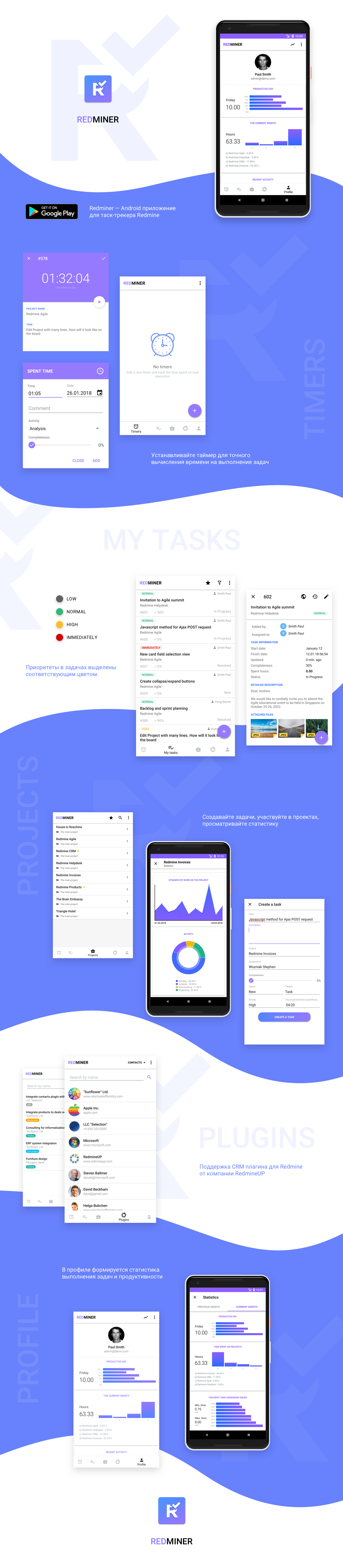
Timer and time tracking from a smartphone
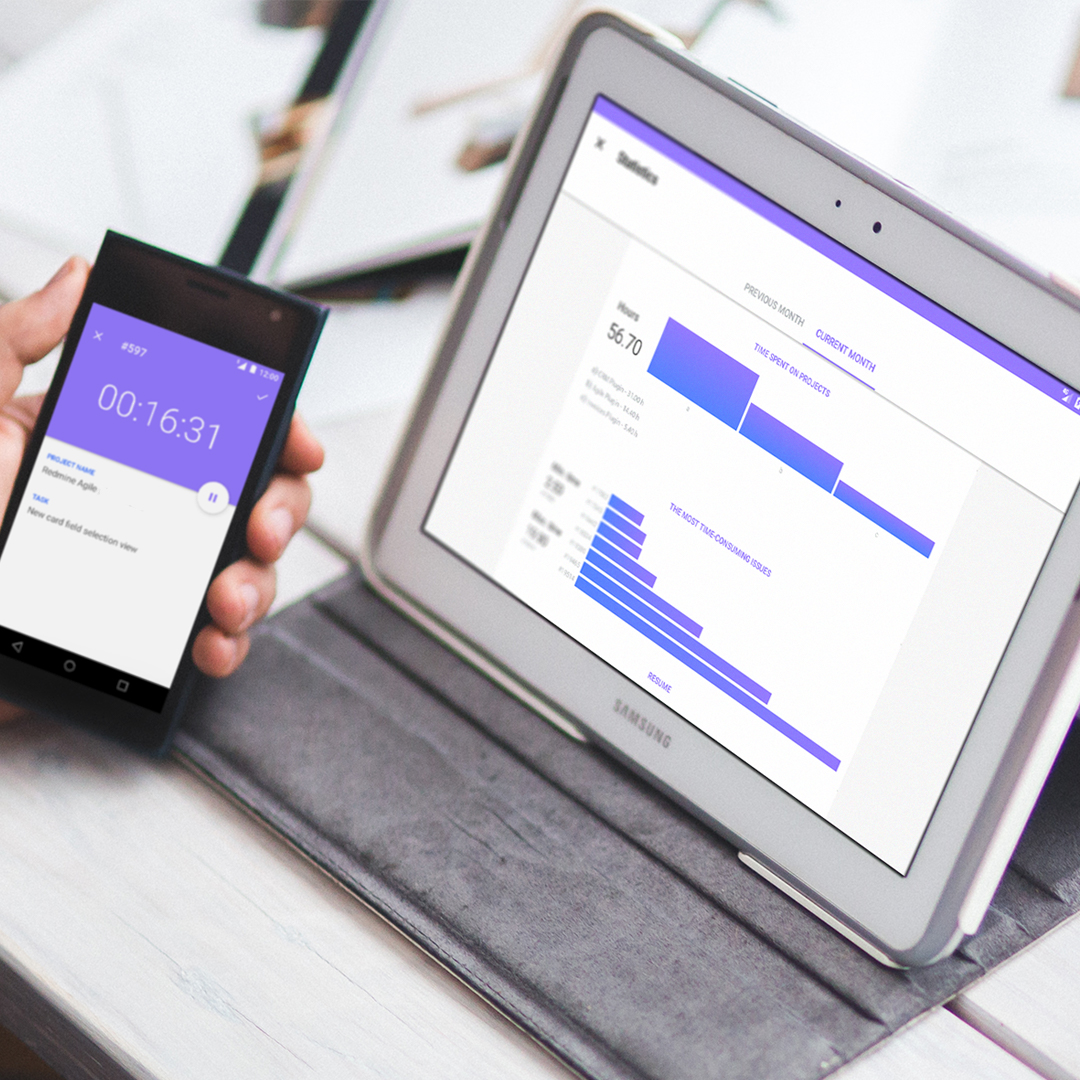
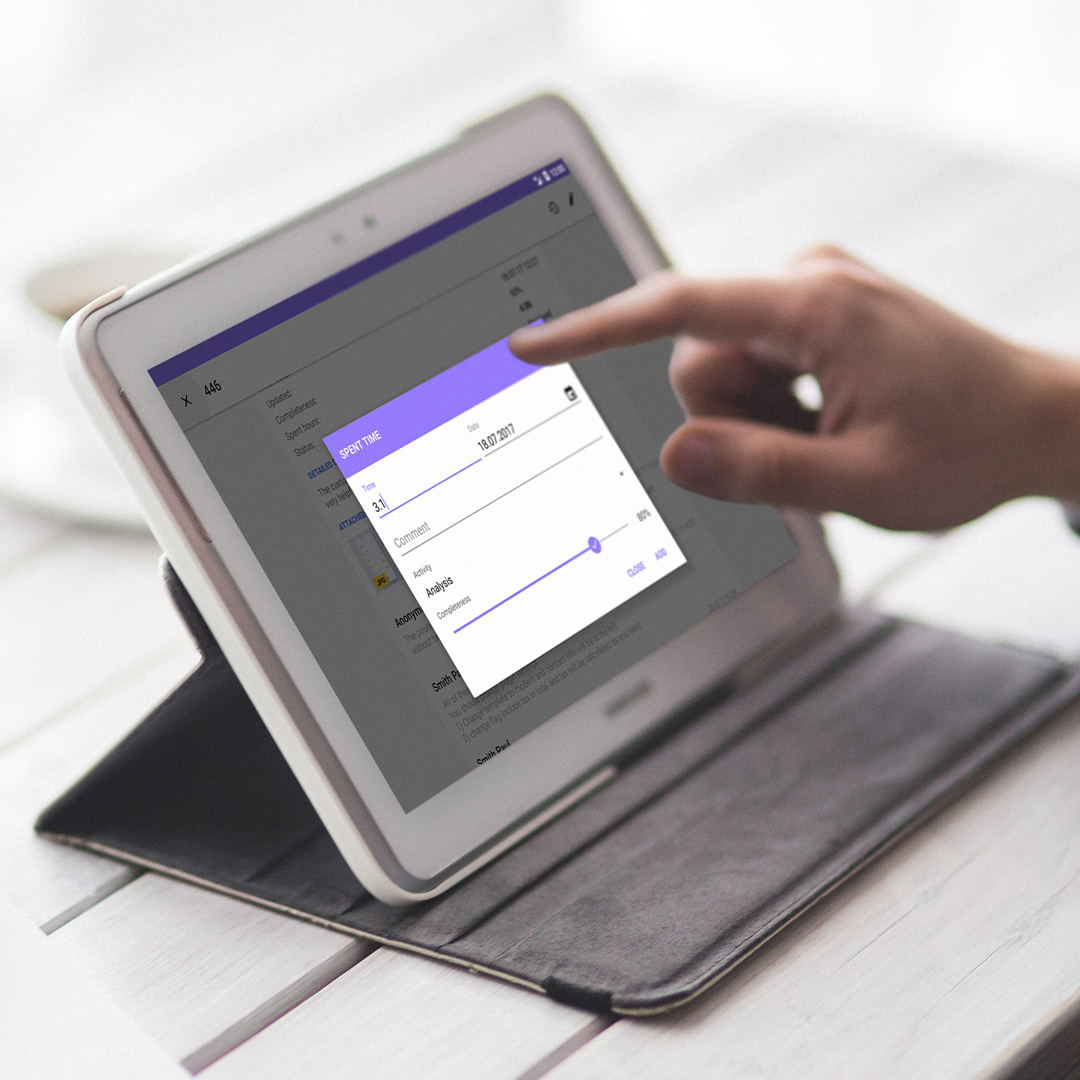
The app’s main use case is end-to-end time tracking. The user opens a task, starts the timer, stops it once the work is complete — and the time spent is recorded in Redmine via the same entry as from the web interface. Hours are recorded in real time, rather than being recalled from memory at the end of the week — the quality of estimates and the profitability of projects depend on this approach.
Monthly work statistics
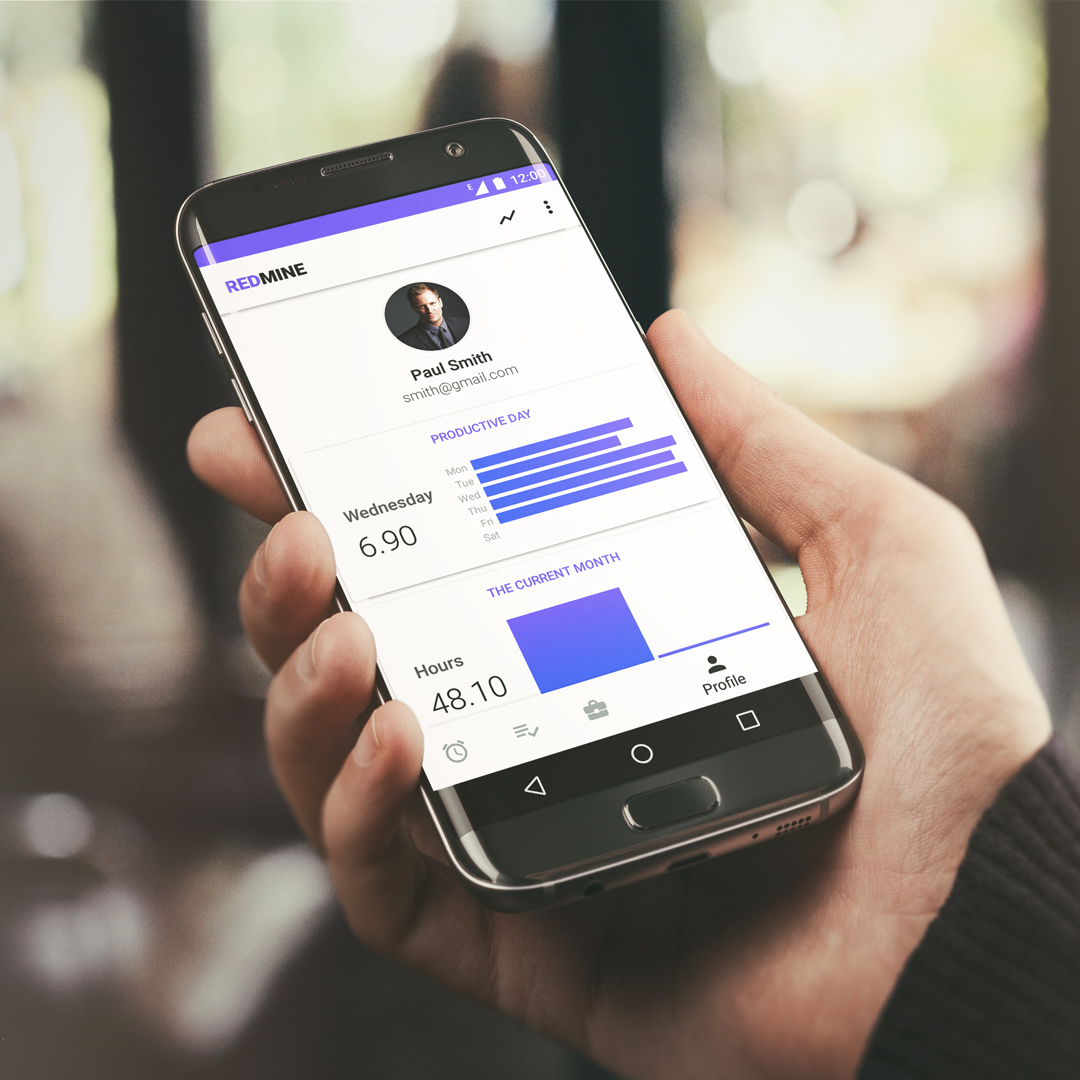
A separate section shows the monthly summary: how many hours were worked, which tasks proved to be the most and least labour-intensive, and how many projects the user was involved in. This is the level of data that a manager usually has to collect manually from tracker reports — here, it’s available in just a few taps.
Priorities and task navigation
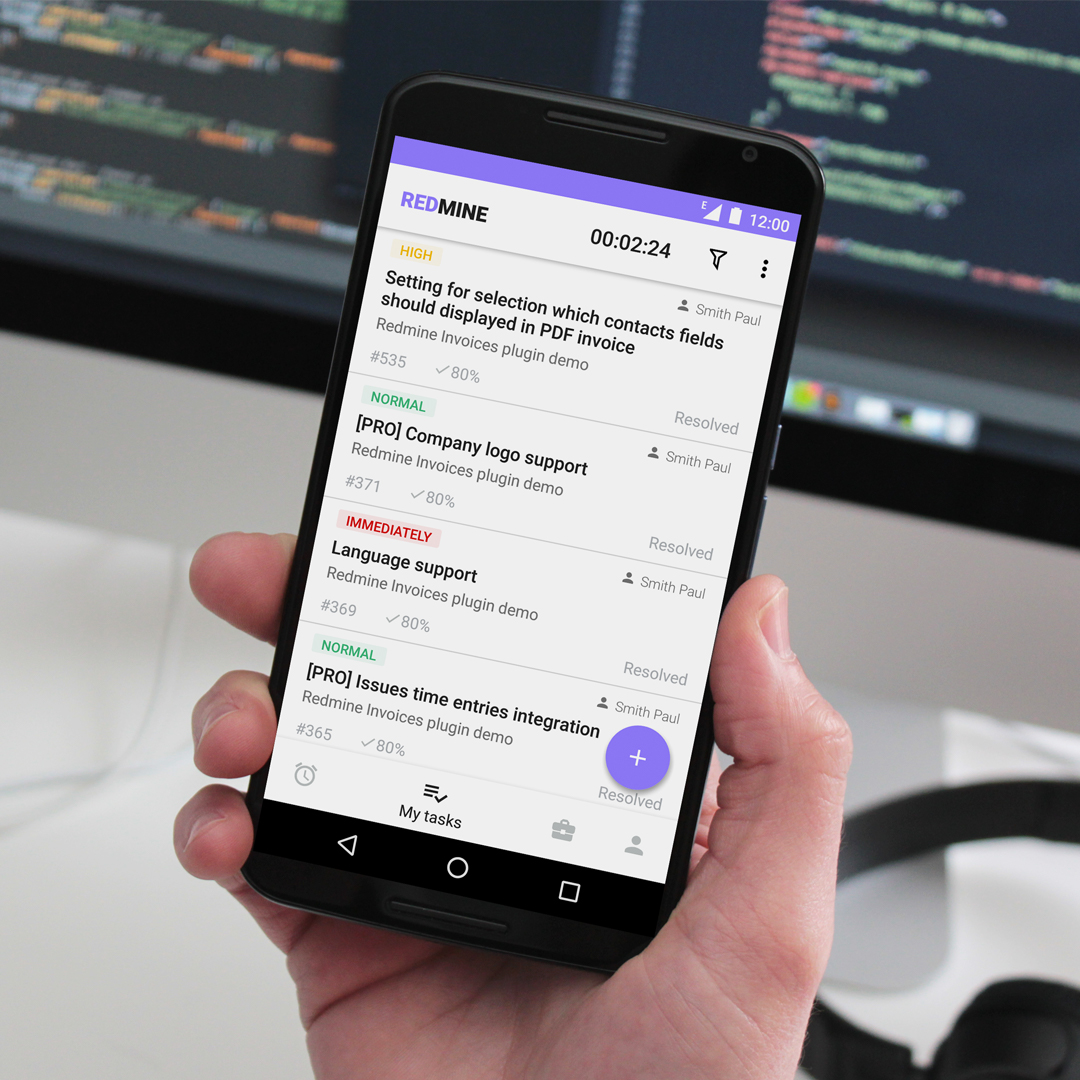
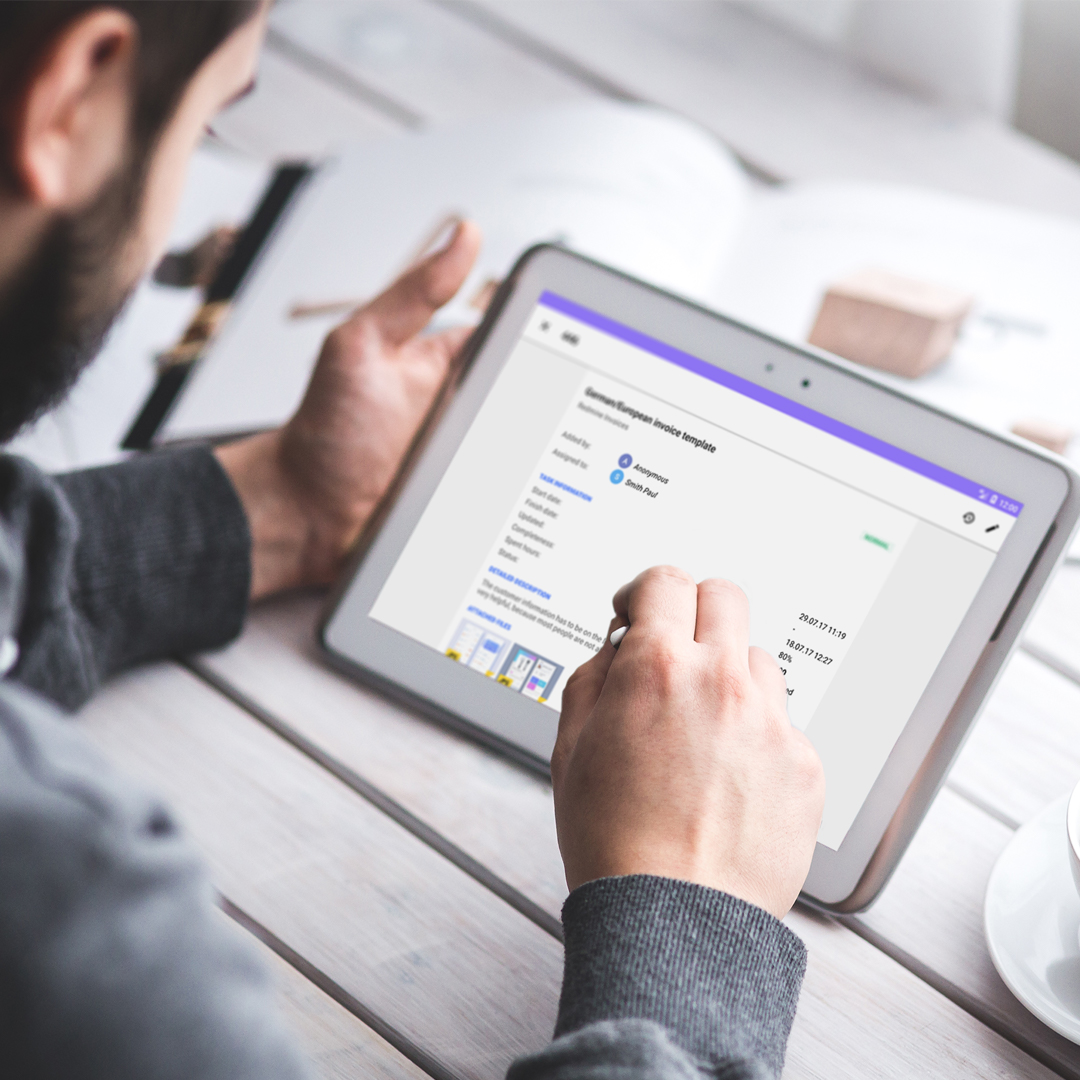
Task lists in Redmine quickly become unreadable on a small screen. In Redminer, priorities are colour-coded, so the user can see what’s urgent even before opening a task card, and can navigate to the required project without scrolling through long tables.
Support for the RedmineUP CRM plugin
Redminer supports the RedmineUP CRM plugin for Redmine: if a company uses the tracker not only for development but also for deals and contacts, plugin support can be enabled in the app’s settings. For service companies, this is a case where Redmine covers both operations and sales — and the mobile client shouldn’t miss out on this aspect.
Community-driven localisation
The interface has been translated into several languages — English, Ukrainian, German, Spanish, Polish, Korean and others. Some of the translations were done by the users themselves: we opened up the opportunity to contribute to localisation, and this has opened up markets for the app where we haven’t invested a single hryvnia in marketing.
Result
- 10,000+ installs on Google Play, a rating of 4.2 out of 546 reviews (as of August 2026)
- The interface is available in more than six languages, with some translations provided by users
- The product has been live since 2017 and remains actively supported: the latest version was released on 11 August 2026
- ideil’s in-house team has removed the clock from the phone — the task that started it all has been completed
- For Redminer’s clients, this demonstrates a full lifecycle: not just the code, but also the release on the store, support, updates and handling user feedback
Frequently Asked Questions
Do I need to move Redmine to the cloud to use Redminer?
No. The app connects to your own Redmine installation — projects, tasks and hours remain on your server, and the app acts as a mobile client for it.
Is Redminer free?
The app is available on Google Play for free, though some features are paid for — these can be purchased within the app.
Why does a service company need its own product?
The product forces us to go through a process that no client project provides: releases on the store, responding to reviews, supporting older versions, and retention analytics. We bring this experience to our clients’ mobile projects — from planning releases to managing feedback on the app store.
Does your team work in an internal system that lacks convenient mobile access? Take a look at our approach to mobile app development and related case studies — the TSN Android app and the Forbes Ukraine mobile app. Tell us about your project.